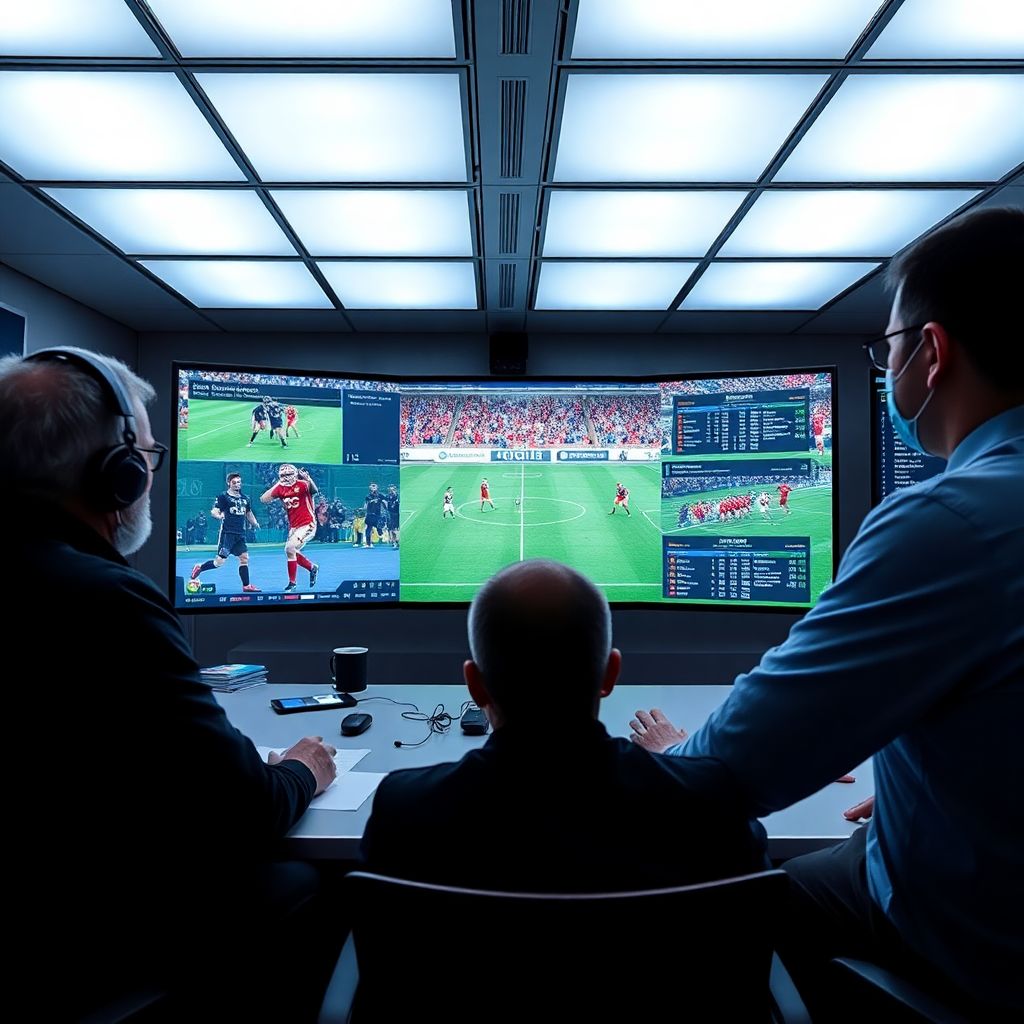
Analysing a historical football final helps coaches understand decisions under extreme pressure, but you must treat it as inspiration, not a rigid template. Use video, data and context to identify principles, then translate them into your team’s reality, respecting your level, players’ profile, physical demands and competition constraints.
Quick tactical summary and decisive factors
- Define the match context clearly: stakes, team profiles, styles and constraints before you dissect tactics.
- Separate what was planned (game model) from what was reactive (in-game adaptation).
- Use multiple camera angles and, when possible, simple software de análise de jogo de futebol para treinadores, but avoid over-interpreting small details.
- Extract repeatable principles (spacing, pressing triggers, roles) instead of copying exact formations.
- Check how psychology, fatigue and game state influenced tactical choices before labelling them as “right” or “wrong”.
- Convert insights into specific drills, constraints and session plans that fit your calendar and level.
- Keep learning with livros de análise de desempenho no futebol para treinadores and a good curso de análise tática de futebol online, and test ideas gradually.
Match context: stakes, team profiles and pre-match narratives
In a historical final, context is as decisive as tactics. Stakes (title, promotion, rivalry), recent form, injuries and external pressure shape every decision. When you study such a match, your first task is to reconstruct this environment instead of jumping directly to formations and heatmaps.
Team profiles matter: one side may be dominant in possession, the other stronger in transitions or set pieces. Financial power, squad depth and international experience also influence risk tolerance. A coach defending a title behaves differently from an underdog chasing its first trophy.
Pre-match narratives affect psychology and strategy. Media pressure, expectations of fans, talk about “legacy” or “redemption” change how players manage risk, time wasting, emotional control and aggression. When you analyse a final, always ask: “What did each bench absolutely need from this match?”
For your own reality in Brazil, link this context analysis to your competição: youth vs professional, calendar congestion, travel and climate. That prevents you from copying solutions that were designed for very different conditions, a recurring risk for coaches who binge-watch finals without critical filtering.
Pre-match choices: formations, personnel and strategic intent
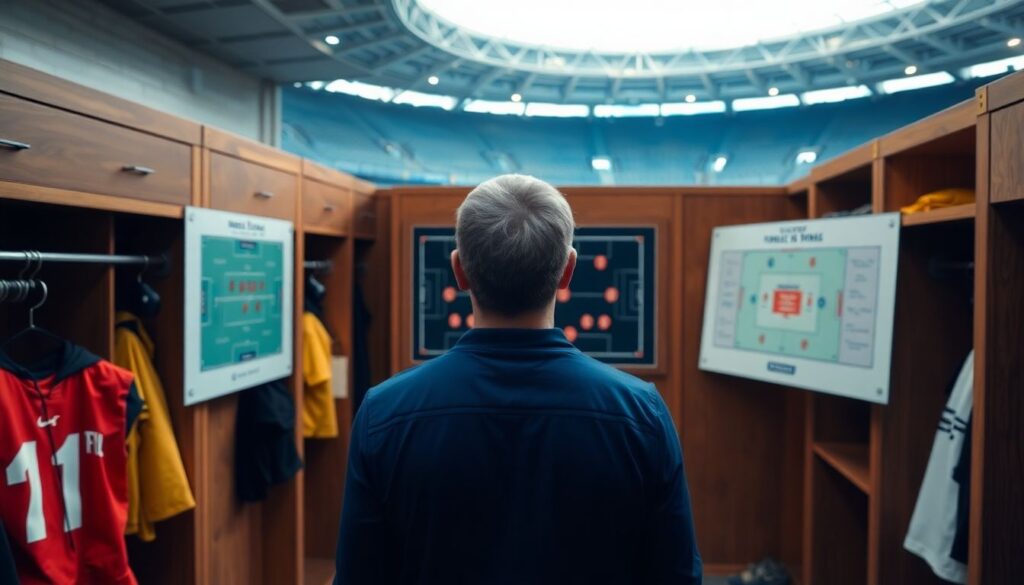
Pre-match decisions are the bridge between a coach’s game model and what we actually see in the final. When you use a famous final as a study case, break down these choices step by step instead of only naming the formation.
- Base shape and its flexibility: Identify the nominal formation, then how it morphs in possession, non-possession and transition. Note where players “start” and where they actually operate.
- Selection and role profiles: Observe why specific players started: leadership, pressing ability, aerial power, experience, set-piece quality. Connect names to functions, not reputations.
- Match-ups and asymmetries: Look for deliberate asymmetries (full-back high on one side, winger wide on the other) designed to attack a specific opponent weakness.
- Risk management plan: Identify how the coach protected against counters, disciplinary issues and early goals against. Was the plan conservative or aggressive for the first 15 minutes?
- Set-piece preparation: Note squad choices clearly linked to corners, free-kicks and long throws: tall defenders, left-footed takers, blockers, decoy runners.
- Contingency options on the bench: Observe the profile of substitutes: like-for-like options vs game-changers, penalty specialists, aerial threats, young impact players.
- Alignment with club identity: Check whether the pre-match plan respected the season-long identity or was a radical one-off; both can work, but each has clear risks.
For your own formação para treinadores de futebol profissional, treat this as a checklist when preparing any knockout match. In licensing courses and even a pós-graduação em treinamento esportivo e futebol, this type of structured thinking is more useful than knowing advanced statistics you cannot apply with your current club.
In-game inflection points: substitutions, momentum shifts and tactical pivots
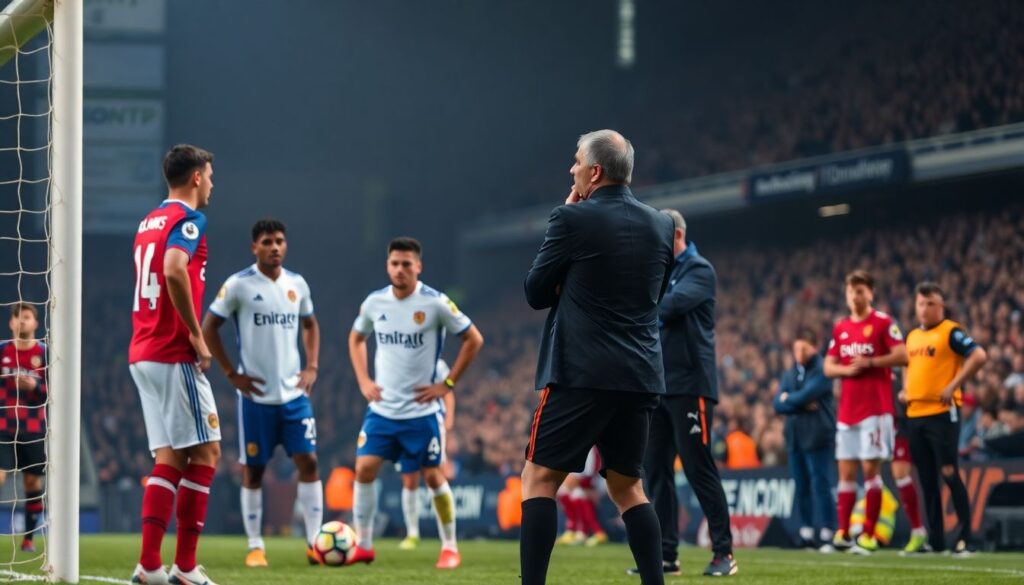
Inflection points are moments when the trajectory of the final changes: a substitution, a tactical adjustment, a red card, a goal or even a missed chance that shakes confidence. Analysing them helps you understand when to intervene and what is realistically controllable from the bench.
- Planned vs reactive substitutions: Some changes are scripted (minute + load management), others react to fatigue, cards or scoreline. Learn to distinguish them and note the triggers: pressing intensity dropping, losing control of second balls, winger no longer tracking back.
- Structural tactical shifts: A line of four becoming a line of three, or a double pivot becoming a single pivot with two interiors. Focus on the new occupation of key zones: half-spaces, between lines, last line width.
- Psychological momentum swings: Track how teams respond to major events (goal, VAR decision, injury). Do they sit deeper, start forcing vertical balls, or press higher impulsively?
- Time management strategies: Analyse how the leading team manages tempo (longer possessions, fouls, substitutions) and how the chasing team accelerates play (quick restarts, more direct passing, higher defensive line).
- Last-15-minute risk profile: Observe which coach accepts individual duels at the back, overloads the box, or risks counterattacks with extra attackers.
- Penalty preparation and endgame psychology: If the match goes to penalties, note behaviour: huddles, communication, kicker order, goalkeeper routines and staff intervention.
When you reflect on these scenarios, be honest about your competition reality. Many decisions seen in a Champions League or Copa do Mundo final are based on squad depth and recovery structures that regional clubs in Brazil do not have. The lesson is to copy the logic, not the exact move.
Technical analysis: set pieces, transitions and finishing patterns
Technical-tactical analysis in a historical final can easily become an obsession with detail and fancy diagrams. To keep it useful and safe, frame it around three reproducible moments: set pieces, transitions and finishing patterns. These are areas where even modest clubs can apply elite ideas with adaptations.
- Advantages in a detailed case study
- Set pieces are highly coachable: routines, screens, decoys and timing can be trained with repetition and video feedback.
- Transition principles (counter-press, counter-attack, rest defence) scale well from elite to amateur with simplified rules.
- Finishing patterns teach your players where chances actually come from: cut-backs, second balls, far-post runs.
- Using simple software de análise de jogo de futebol para treinadores makes it easier to tag and illustrate these patterns.
- These elements are measurable: shots from specific zones, corners leading to chances, regain locations after loss.
- Limitations and safety warnings for coaches
- Elite-level set-piece complexity can overload semi-professional or youth players; reduce to a few clear cues.
- Transition intensity in a historical final may be impossible to replicate with your squad’s conditioning and schedule.
- Copying finishing patterns without considering your striker profiles (height, speed, footedness) leads to frustration.
- Broadcast angles may hide key details like starting positions, communication and micro-adjustments.
- Without a solid base in fundamentals, adding complex routines from case studies often creates confusion, not advantage.
Psychology and conditioning: managing pressure, fatigue and focus
Finals distort behaviour. Players and coaches rarely act “normally” under the emotional and physical load of a deciding match. When you analyse a historical final, integrate psychology and conditioning into every tactical note, and be realistic about what part of that you can control at your level.
- Mistake: judging decisions without considering fatigue – A full-back not overlapping after the 70th minute may be exhausted, not “cowardly”. Always check how cumulative running and climate might explain choices.
- Mistake: assuming your players will handle pressure like stars – Penalty shoot-outs, last-minute chances and hostile stadiums weigh differently on youth or regional players than on world-class professionals.
- Mistake: copying pre-game rituals and speeches – Emotional strategies that worked with a specific group and culture can backfire if reproduced mechanically in a different dressing room.
- Mistake: ignoring recovery and micro-injuries – Some conservative tactical decisions protect players carrying minor injuries or heavy minutes across the season.
- Myth: “Big games require totally different tactics” – Finals often amplify simple, well-trained habits rather than fancy new ideas introduced in the last training session.
- Myth: “Leaders are born for finals” – Leadership behaviours are built over time; what you see in a final reflects months of role clarity and shared responsibility, not pure personality.
Courses like a pós-graduação em treinamento esportivo e futebol usually emphasise this integration of mental, physical and tactical layers. Even if you are not in formal education, keep this holistic view when using any case study with your team.
Applied coaching: concrete drills, session plans and implementation roadmap
To turn a historical final into practical development, you need a safe, progressive roadmap. Instead of immediately changing your system, apply insights through controlled training tasks, gradually increasing complexity and pressure while monitoring player response and match impact.
Mini-case example: learning from a transition-dominant champion
Imagine you study a famous final where the champion created most chances from fast counter-attacks after regaining the ball in midfield. You want to adopt this principle with your senior team in a regional league in Brazil, but your squad has limited conditioning and little exposure to high pressing.
- Step 1 – Classroom and video (30-40 minutes)
- Show 6-8 clips of counter-attacks from the final, paused before the regain and at the finish.
- Ask players to identify: number of passes, direction of first pass, number of players involved, zones attacked.
- Agree on 2-3 simple rules, for example: “First pass forward if safe”, “One runner attacks depth, one supports between lines”.
- Step 2 – Technical-tactical drill without pressure
- Exercise: 4v2 regain and finish. Four attackers play in a grid versus two defenders; when defenders win the ball, they must counter into a mini-goal within 6 seconds.
- Focus on first touch, body orientation and trigger words to start depth runs.
- Step 3 – Small-sided game with constraints
- Game: 7v7+keepers, regular field width, shorter length. Reward goals scored within 10 seconds of regaining the ball with double value.
- Coach the behaviour from the case study (fast support, verticality) rather than the shape or star-player actions.
- Step 4 – Match-plan micro-adjustment
- For the next official match, define one clear pressing zone (e.g., middle third) and one main side to launch counters from.
- Evaluate post-game: number of regains in that zone, number of fast attacks created, player feedback on fatigue and clarity.
- Step 5 – Continuous education and refinement
- Use livros de análise de desempenho no futebol para treinadores to deepen your understanding of transition metrics and principles.
- Consider a curso de análise tática de futebol online or broader formação para treinadores de futebol profissional to structure your analytical habits.
This progressive approach protects players from sudden overloading and avoids tactical chaos. You are not trying to become a clone of the champion in the video; you are selectively integrating one or two principles that match your squad and environment.
Coaches’ common queries and practical clarifications
How many historical finals should I analyse in detail each season?
Focus on depth, not volume. Analysing one or two finals per year in detail, connecting them to your game model, is usually more valuable than superficially watching many. The key is to always translate insights into session content and match behaviours.
Can I use a historical final as a model for my youth team?
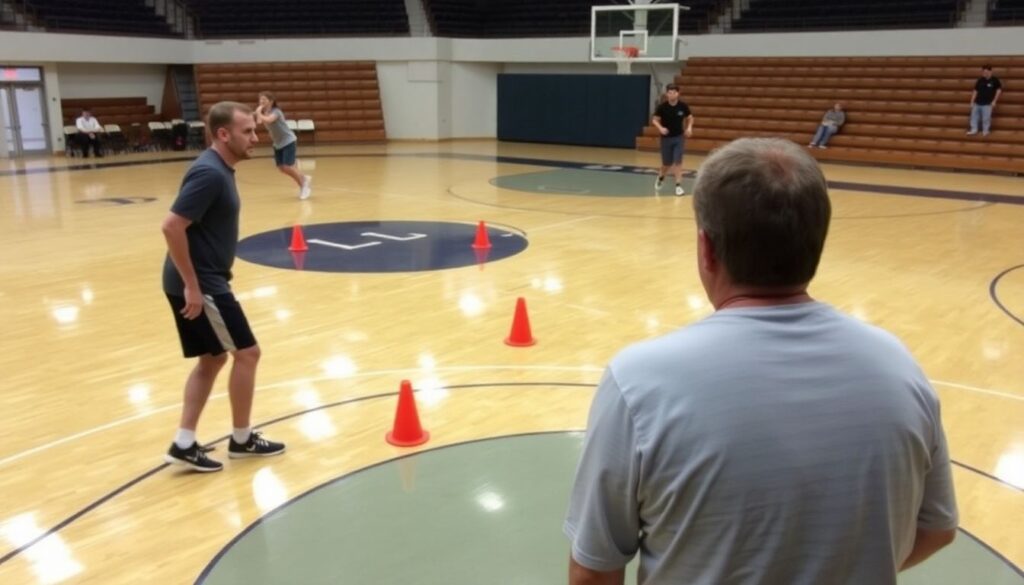
Yes, but adapt aggressively. Simplify pressing, reduce complexity in rotations and set pieces, and adjust physical demands. Use short clips to illustrate principles like spacing, support and transition instead of trying to copy full-game strategies.
Do I need advanced software to benefit from match analysis?
No. Basic video tools are enough to start: pause, slow motion and simple tagging. Dedicated software de análise de jogo de futebol para treinadores becomes more relevant as your level and time for analysis increase, especially in professional environments.
How can formal education help me with case studies?
A structured formação para treinadores de futebol profissional or a pós-graduação em treinamento esportivo e futebol teaches frameworks, terminology and ethics for analysis. This keeps your work consistent, realistic and aligned with your club’s context instead of being driven by social media narratives.
What is the safest way to introduce ideas from a final into my team?
Start with one principle at a time, test it in training with clear constraints, then use it for limited minutes in a friendly or low-risk match. Monitor performance and player feedback before making it part of your main game model.
Are books and courses really necessary if I already watch a lot of football?
Watching is useful but often unstructured. Livros de análise de desempenho no futebol para treinadores and a good curso de análise tática de futebol online help you systematise observation, define priorities and avoid common cognitive biases in your conclusions.
How do I avoid copying star-player solutions that my squad cannot reproduce?
Always describe actions in terms of principles, not individuals. Instead of “our winger must dribble like that star”, think “we want to isolate our winger 1v1 more often by overloading the opposite side”. Principles are adaptable; individual talent is not.